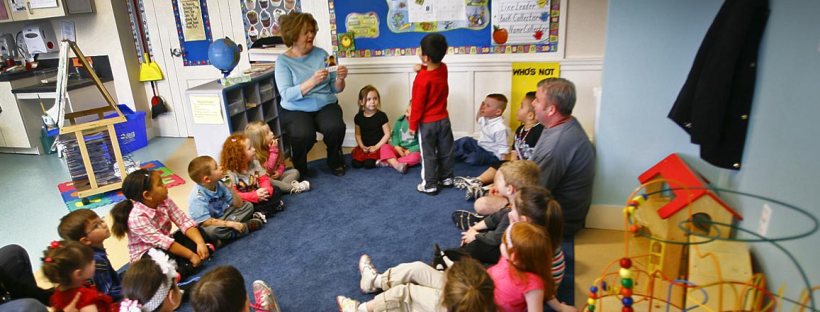
Culturally Responsive Teaching Strategies

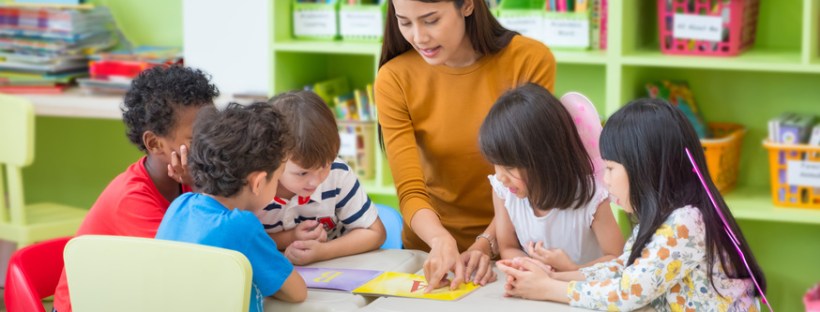
Effective practices for working with culturally and linguistically diverse children are best practices for every child. Teachers should uncover children's culturally acquired knowledge and take their cultural backgrounds into consideration when developing the curriculum and teaching leading to positive learning outcomes for students across all age groups. Key principles of effective practice for culturally diverse … Continue reading Culturally Responsive Teaching Strategies

Communication and Collaboration with Culturally Diverse Families

The role of families in communicating and collaborating with schools has evolved over time. Today families and schools work more together than in previous times. Collaboration is a style of interaction that involves parity, communication, and mutual goals. Benefits of collaboration include mutual support, shared knowledge, and supported student learning. Important elements of collaboration include … Continue reading Communication and Collaboration with Culturally Diverse Families

An Educator’s Learning Journey of Cultural Competence

Educators who are culturally competent respect multiple cultural ways of knowing, seeing and living, celebrate the benefits of diversity and have an ability to understand and honour differences. Educators also seek to promote children’s cultural competence. In practical terms, it is a never ending journey involving critical reflection, of learning to understand how people perceive … Continue reading An Educator’s Learning Journey of Cultural Competence

Family and Community Resources

Community resources in the South Florida that are available to assist families in times of need are Community Action and Human Services of Miami-Dade, Florida Department of Children and Families, Family Central (Miami-Dade), and The Women’s Fund Miami-Dade. Community Action and Human Services of Miami-Dade empowers families, individuals and communities through the provision of comprehensive … Continue reading Family and Community Resources

Culturally Responsive Classroom Management Strategies

Culturally Responsive Classroom Management (CRCM) is an approach to running classrooms with all children, [not simply for racial/ethnic minority children] in a culturally responsive way. More than a set of strategies or practices, CRCM is a pedagogical approach that guides the management decisions that teachers make. It is a natural extension of culturally responsive teaching … Continue reading Culturally Responsive Classroom Management Strategies

Anti-Bias Curriculum in Early Childhood Education

Anti-bias curriculum is an approach to early childhood education that sets forth values-based principles and methodology in support of respecting and embracing differences and acting against bias and unfairness. Anti-bias teaching requires critical thinking and problem solving by both children and adults. The overarching goal is creating a climate of positive self and group identity … Continue reading Anti-Bias Curriculum in Early Childhood Education

The Importance of Play in Early Childhood

Play-based curriculum supports young children's academic achievement and autonomy. Various theories and research support play-based curriculum as a vehicle for learning and development in all domains of young children. Autonomy versus shame and doubt is the second stage of Erik Erikson's stages of psychosocial development. This stage occurs between the ages of 18 months to … Continue reading The Importance of Play in Early Childhood

Fostering Social and Emotional Development using the RULER strategy

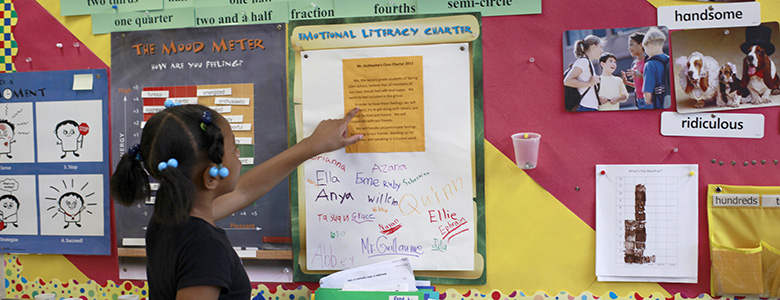
The Ruler strategy can help teachers guide students to recognize emotions in oneself and others and to label emotions with accurate words by using the signature RULER tool, the Mood Meter. Students can place their name in the different color quadrants to recognize and label their emotions: Angry, Happy, Sad, and Calm. When arriving at … Continue reading Fostering Social and Emotional Development using the RULER strategy

Culturally Appropriate Positive Guidance with Young Children

Young children benefit when teachers and families establish healthy partnerships and define common goals for children. Many behaviors have cultural roots that teachers can capitalize on to foster each child’s developing identity, share cultural lessons with the whole class, and help children cultivate shared norms for their behavior as students. Research on the experiences of … Continue reading Culturally Appropriate Positive Guidance with Young Children