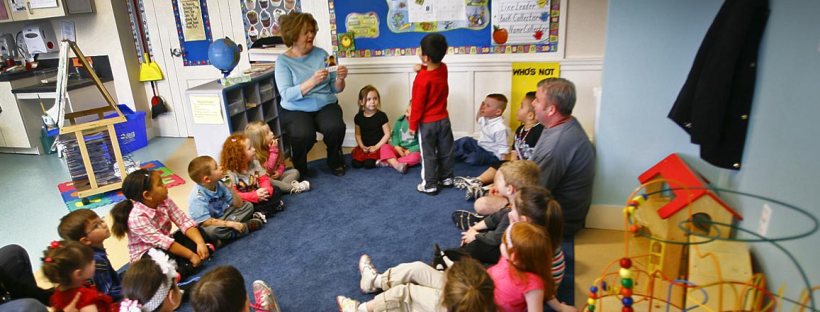
Young children benefit when teachers and families establish healthy partnerships and define common goals for children.
Many behaviors have cultural roots that teachers can capitalize on to foster each child’s developing identity, share cultural lessons with the whole class, and help children cultivate shared norms for their behavior as students. Research on the experiences of culturally and linguistically diverse young children in early childhood settings implies some guidance challenges are based on differences between home and school practices. Teachers recognize that some conflicts among children reflect the children’s early understanding of their own cultural scripts (family and community practices and rituals for how things are done) and their limited understanding of others’ scripts.
As teachers provide positive, developmentally appropriate guidance for a particular behavior, they consider the issue through the lens of cultural appropriateness, an important dimension of developmentally appropriate practice. This lens may encompass family traditions, religious beliefs, community etiquette, social class, and contextual differences (such as urban, rural, and suburban practices), any of which may be a source of possible conflict between children.
As they choose guidance strategies, teachers help children understand that their peers’ play and behavior may look and feel different from their own because of different cultural practices, and they support children as they gradually learn to negotiate different sets of expectations between home and early education settings.
Early childhood educators may find that the expectations of some children and families they serve do not fit their framework for positive guidance. Culturally appropriate positive guidance requires educators to understand and mediate differing views on child guidance between home and school contexts.
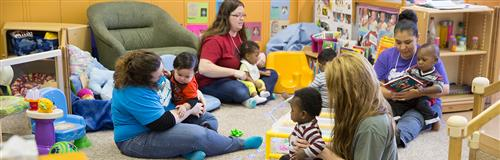
Educators may implement the following to enact culturally appropriate guidance in early childhood classrooms:
- Understanding family perspectives and goals for child development
- Understanding family practices that clash with early childhood center/ school principles
- Making a program’s structure more accommodating
- Using socio-cultural conflicts among children as teachable moments
- Children’s flexibility and resilience in negotiating multiple learning contexts
- Understanding peer culture and fostering classroom community
For many children, preschool is their first significant opportunity to learn about routines and behaviors that are different from their home life. Early childhood practitioners should keep in mind that differences in cultural routines can be just as hard—if not harder—to adjust to as differences in when and where children are eating and napping. To examine their cultural assumptions, educators should challenge themselves by taking another colleague’s or a family’s perspective on child guidance. Agreement may not always be possible, but understanding and respect can always grow. As practitioners develop their cultural knowledge, they will be better able to identify opportunities for learning.
Reference: NAEYC
 Cultural Competence ToolBox